


Car Rush
TH68
I spent time with Car Rush as a quick racing game built around drawing cars, and its main appeal became clear almost immediately: it turns a simple sketching action into a short, playful challenge. It is free to download, aimed at Everyone, and developed by TH68, so it is easy to imagine it being opened on a shared phone when someone wants something light rather than a long racing session.
The important thing is to approach it with the right expectations. This is not trying to replace a full racing simulator or a large arcade racer with licensed vehicles, detailed tuning, and lengthy championships. Its idea is much more compact. You draw the car you want to use, then deal with the consequences of that shape while trying to make progress. I found that unusual enough to keep me curious, although it also means the experience depends heavily on whether you enjoy experimenting with imperfect designs.
How the drawing idea works in everyday play
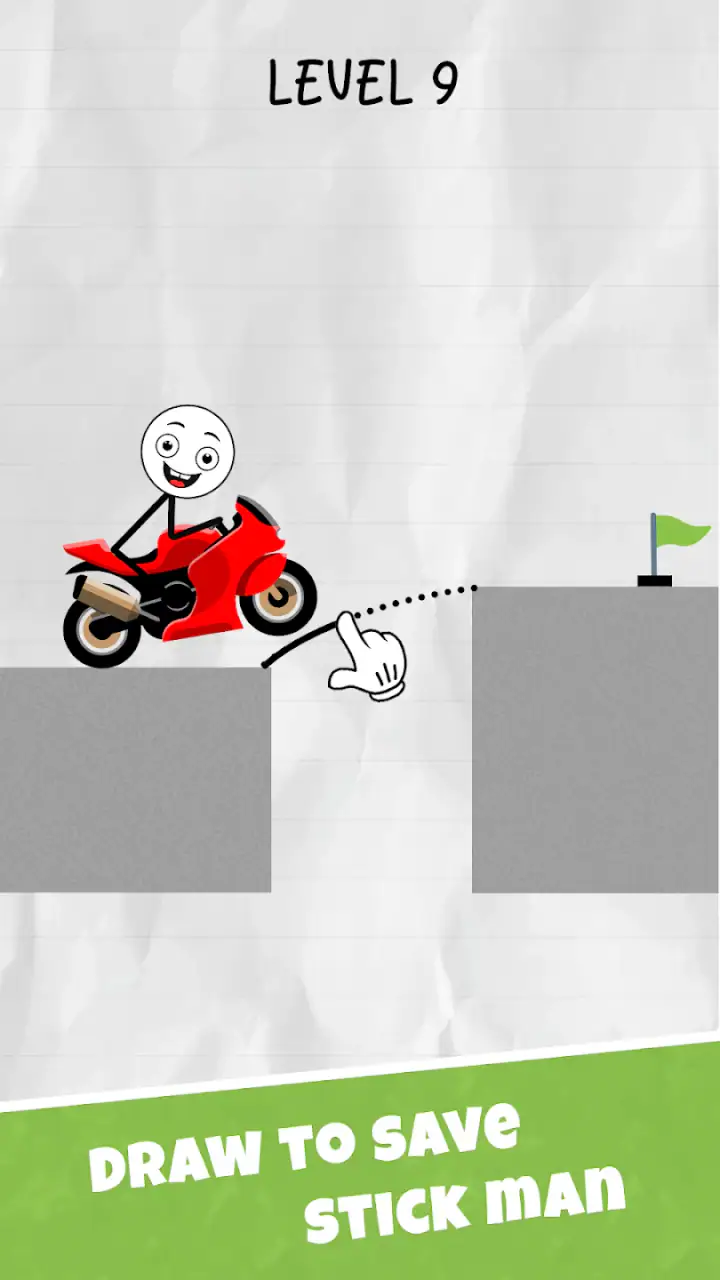
The drawing mechanic gives the game a different rhythm from ordinary racing titles. In a conventional racer, the vehicle is already built and your attention goes to steering, braking, acceleration, and track position. Here, the vehicle begins with your input. That makes each attempt feel partly like a race and partly like a small design experiment.
I liked starting with a straightforward shape instead of trying to create something elaborate. A clean, balanced drawing is easier to understand because you can connect the result with what happens during the run. If the car behaves poorly, changing one part of the drawing at a time is more useful than completely redesigning it between attempts. That simple habit turns random trial and error into a basic learning loop.
One of the less obvious strengths is that the drawing stage gives the game a natural handoff between players. Someone can create a design, pass the device to another person, and let them test it. That works well in a household where people are sharing one phone or tablet and do not want to create separate profiles just to enjoy a few minutes together.
Related News






There is also a trade-off here. The drawing concept sounds more open-ended than the actual experience may feel after repeated sessions. Once you discover a shape that performs reliably, experimentation can become less exciting unless you deliberately set yourself a new challenge. I found the game most enjoyable in short bursts, especially when I treated each drawing as a fresh idea rather than searching immediately for one perfect design.
For a child, the appeal is easy to understand: drawing something and seeing it move gives a direct connection between imagination and result. For an adult, the attraction is more about testing cause and effect without needing to study complicated controls. That combination makes it suitable for casual shared play, but less satisfying for anyone looking for deep vehicle management or serious competitive racing.
What I would do before handing over a shared device
Because the game is designed for quick interaction, I would set a simple household boundary before passing it around: each person gets a turn to draw and a turn to test. Without that small agreement, the most enthusiastic player can easily take over the device, especially when a run ends quickly and everyone wants to try “one more” design.
Gallery
I would also decide whether drawings should be treated as experiments or as attempts to beat a personal result. Those are different styles of play. The first keeps the mood relaxed and encourages unusual shapes. The second creates a clearer goal, but it can make younger players frustrated if their design performs worse than someone else’s.
Another useful routine is to keep the first few attempts simple. A shared device often means several people are learning the controls at once, and complicated drawings make it harder to tell whether a problem came from the design or from unfamiliar handling. Starting with basic outlines gives everyone a common reference point before they begin trying more ambitious ideas.
I would not describe this as a game that needs a long tutorial session. Its central idea is approachable, which is one reason it works well for a casual household setting. Still, a quick explanation can prevent arguments: the person drawing is making a test vehicle, not guaranteeing a winning one. That distinction matters when a child expects every picture to perform perfectly.
Keeping turns fair when there is no long campaign
The short-session nature of the game is helpful for coordination. A family can fit a few attempts into a waiting room, a quiet break, or the end of the day without committing to a full race series. I found it easier to suggest a fixed number of turns than to rely on an undefined stopping point. “Two designs each” is clearer than “play until we are done,” particularly when several people are using the same device.
A good cooperative variation is to let one person draw and another person evaluate the result. The evaluator can describe what they noticed rather than simply saying that the car was good or bad. Did the shape seem stable? Did it behave differently from the previous attempt? This turns the game into a small observation exercise and gives younger players a way to participate even when they are not holding the device.
For siblings or friends who enjoy competition, I would keep the challenge focused on improvement rather than ownership of the best drawing. A design can be successful because it is funny, surprising, or creative, not only because it completes a run more effectively. That approach fits the playful premise better and avoids making the shared device feel like a contest that one person has to control.
There is no reason to assume that every household will use it in exactly the same way. Some players will want to draw quickly and move on, while others will spend more time refining their idea. If the device is shared between those two types of players, alternating a fast round with a longer experiment keeps either person from feeling ignored.
Account boundaries and practical setup expectations
Since I was reviewing it as a game rather than a social platform, I approached setup in a deliberately simple way. I would install it on the device intended for play, open it once, and check how it feels before giving it to a child. That is less about complicated configuration and more about making sure the device is comfortable to hold and that everyone understands the basic flow.
The game is free, but it includes in-app purchases ranging from nine cents to $19.99 per item. That is the detail I would pay the most attention to on a shared device. A child may see an available purchase as part of the game rather than as a real transaction, so the person who owns the device should handle account and payment boundaries before play begins.
I would not treat the age label of Everyone as a substitute for household supervision. An Everyone rating can help indicate that the general content is broadly accessible, but it does not decide whether a particular child understands purchases, turn-taking, or screen-time limits. Those decisions still belong to the adult managing the device.
For a personal device, the setup is more straightforward: install the game, try a few drawings, and decide whether the short racing loop suits you. For a shared phone, I would establish who is allowed to make purchases and who can change device settings. Those are ordinary device-level boundaries, but they matter more when a game is easy to hand to a younger player.
I also recommend checking the operating-system requirement before planning a household session. The game supports devices running Android 7.1 or later. That makes it usable on a range of older Android hardware, but compatibility still depends on the specific device and how well that device handles current software. If the shared phone is old, testing it before a trip or family gathering is wiser than discovering a problem when everyone is ready to play.
Age context, trust, and the right kind of supervision
The Everyone rating matches the approachable concept I experienced. Drawing a vehicle and watching it race is easy to explain, and the game does not require a player to understand a complex racing vocabulary before getting started. That makes it a reasonable choice for mixed-age casual play, especially when an adult is nearby to explain the idea of experimenting with designs.
Even so, I would avoid presenting it as an educational tool unless the child naturally turns the drawing process into one. The game can encourage observation, patience, and simple problem solving, but those benefits come from how people play it. They are not a replacement for a structured learning activity.
Trust also matters because the game is more enjoyable when players are allowed to make imperfect drawings. If an adult corrects every design or insists on the most efficient shape, the creative part disappears. I got better results by asking what the player wanted the car to do, then letting the run show whether that idea worked.
For younger children, I would keep the play area calm and make the purchase rule explicit: drawings are free experiments, while anything involving real money requires the device owner. That sentence is simple enough to repeat and avoids turning the game into a confusing lesson about account ownership.
Older children and adults may prefer a more independent approach. They can compare designs, refine their process, and decide how much time they want to spend. In that case, the main supervision issue is not the racing itself but keeping the shared-device agreement clear. The game’s accessibility makes it easy for someone to start playing without asking, so a household rule still helps.
Where it fits among other racing games
Compared with a typical arcade racer, this game is less about memorizing tracks and more about creating the thing you will race. That makes it a better choice when you want a playful design challenge than when you want constant driving action. Someone looking for drifting, detailed car collections, or long-term progression will probably find a conventional racing game more rewarding.
Compared with drawing-focused games, however, the racing result gives your sketch a purpose. You are not only making a picture; you are testing whether your idea works in motion. I found that connection more motivating than a drawing tool with no consequence, although players who mainly want free artistic expression may prefer an app built specifically for illustration.
It also differs from multiplayer racing games that depend on live competition. The appeal here is easier to share informally because one person can draw while another watches or takes the next turn. That is convenient for a household with one device, but it does not provide the same sense of a large competitive community or a deep online racing ladder.
The game’s free entry helps when you are deciding whether the concept is worth your time, but the in-app purchase range means I would still keep spending in mind. If your priority is a completely purchase-free experience for unsupervised children, a title without optional transactions may be a better household choice. If your priority is a quick, unusual activity that several people can understand, this one has a stronger case.
Who will enjoy the drawing loop, and who should skip it
I would recommend it to players who enjoy seeing an idea tested immediately. It is particularly suitable for short breaks, casual family sessions, and people who like changing one detail and observing the result. It also works for anyone who finds standard racing controls intimidating but is comfortable with a simple drawing gesture.
I would be more cautious about recommending it to a dedicated racing fan who wants realistic handling, extensive customization, or a long progression path. The drawing premise is the center of the experience, so it cannot provide all the depth of a traditional racing game without losing what makes it distinctive.
It may also be a poor fit for players who dislike trial and error. The whole point is that a drawing may not behave as expected. If an unsuccessful attempt feels like wasted time, the game’s main loop can become irritating instead of entertaining. I found it more rewarding when I accepted that failed designs were part of the process.
For a shared household, the best fit is a group that can agree on short turns and treat the results with a sense of humor. The weakest fit is a group where one person needs uninterrupted control or where every round must produce a clear winner. In that situation, a more structured racing game with defined multiplayer rules may create less friction.
My household verdict after testing the limits
Car Rush is a small, approachable racing game with a specific hook: you begin by drawing the car rather than simply selecting one. I enjoyed the way that choice makes each run feel personal, and I think the game is at its best when played as a series of quick experiments rather than as a serious racing career.
Its strongest household quality is the ease of passing the device from one person to another. A child can draw, an adult can test the result, and then the roles can switch. That kind of coordination does not require separate accounts or a complicated shared-play arrangement; it only requires clear turns and sensible purchase boundaries.
The limitations are just as important. The concept may lose some freshness once you have found a dependable approach, and it does not offer the depth that fans of full racing games usually expect. The presence of in-app purchases also means the account owner should decide in advance how spending is handled, especially when children use the device.
TH68 has made something that is easy to understand but not entirely ordinary. The game is free, supports Android 7.1 and later, and is currently at version 1.3.6, so it is accessible to many Android users. It has also passed 100K installs, which fits its role as a casual title people can pick up without much preparation.
My final recommendation is simple: try it if you want a light racing activity that gives drawing a practical purpose. I would choose it for a shared-device break, a relaxed family challenge, or a few minutes of creative experimentation. I would skip it in favor of a conventional racer if my goal were deep driving mechanics, sustained competition, or a substantial long-term campaign. The best way to enjoy it is to treat every car as an experiment, not a promise of victory.
FAQs for Car Rush
What is Car Rush, and how does the game work?
Car Rush is a fast-paced mobile driving game focused on quick reactions, traffic avoidance, and short action-packed sessions. You control a vehicle through busy roads, collect rewards, and try to travel as far as possible without crashing. Depending on the version installed, the game may also include different cars, missions, upgrades, and progressively more difficult challenges.
Is Car Rush free to download and play?
Car Rush is generally available as a free download, allowing players to start playing without paying an upfront purchase price. However, free mobile games commonly include optional advertisements, in-app purchases, or both. These extras may provide coins, vehicle improvements, cosmetic items, or other conveniences. Check the store listing on your Android or iOS device for the current pricing, advertising details, and available purchases.
Can I play Car Rush without an internet connection?
Car Rush may support offline play for its main driving modes, which is useful when you are traveling or have limited access to mobile data. Nevertheless, certain features can require an internet connection, including advertisements, cloud synchronization, leaderboards, updates, or in-app purchases. Because offline availability can vary between versions, test the game after installation before relying on it without Wi-Fi or mobile data.
Does Car Rush contain advertisements or in-app purchases?
Car Rush may include advertising and optional in-app purchases, as is common with free-to-play mobile games. Advertisements can appear between rounds or when you choose a reward, while purchases may offer virtual currency, upgrades, new vehicles, or an ad-removal option. You do not necessarily need to spend money to enjoy the basic gameplay, but parental controls are recommended if children will be using the app.
What devices are compatible with Car Rush, and is it suitable for children?
Compatibility depends on the specific Car Rush release and the operating system installed on your device. Before downloading, review the official Google Play or App Store listing for supported Android or iOS versions, storage requirements, and any device limitations. The game is easy to understand, but parents should still review its advertisements, purchase options, privacy permissions, and age rating before allowing younger players to use it.
Pros
- Simple controls make the game easy to pick up and play.
- Short races are ideal for quick gaming sessions.
- Bright visuals give the gameplay a cheerful arcade feel.
- Increasing challenges help keep progression engaging.
- Works well for casual players seeking a lightweight racing game.
Cons
- Gameplay may become repetitive after extended play.
- Limited depth may disappoint experienced racing fans.
- Frequent advertisements can interrupt the racing experience.
- Some levels may feel more dependent on luck than skill.
- Progression can feel slow without optional in-app purchases.


